what other aspects of life can lead to vulnerabilities in attaining adequate nutrition
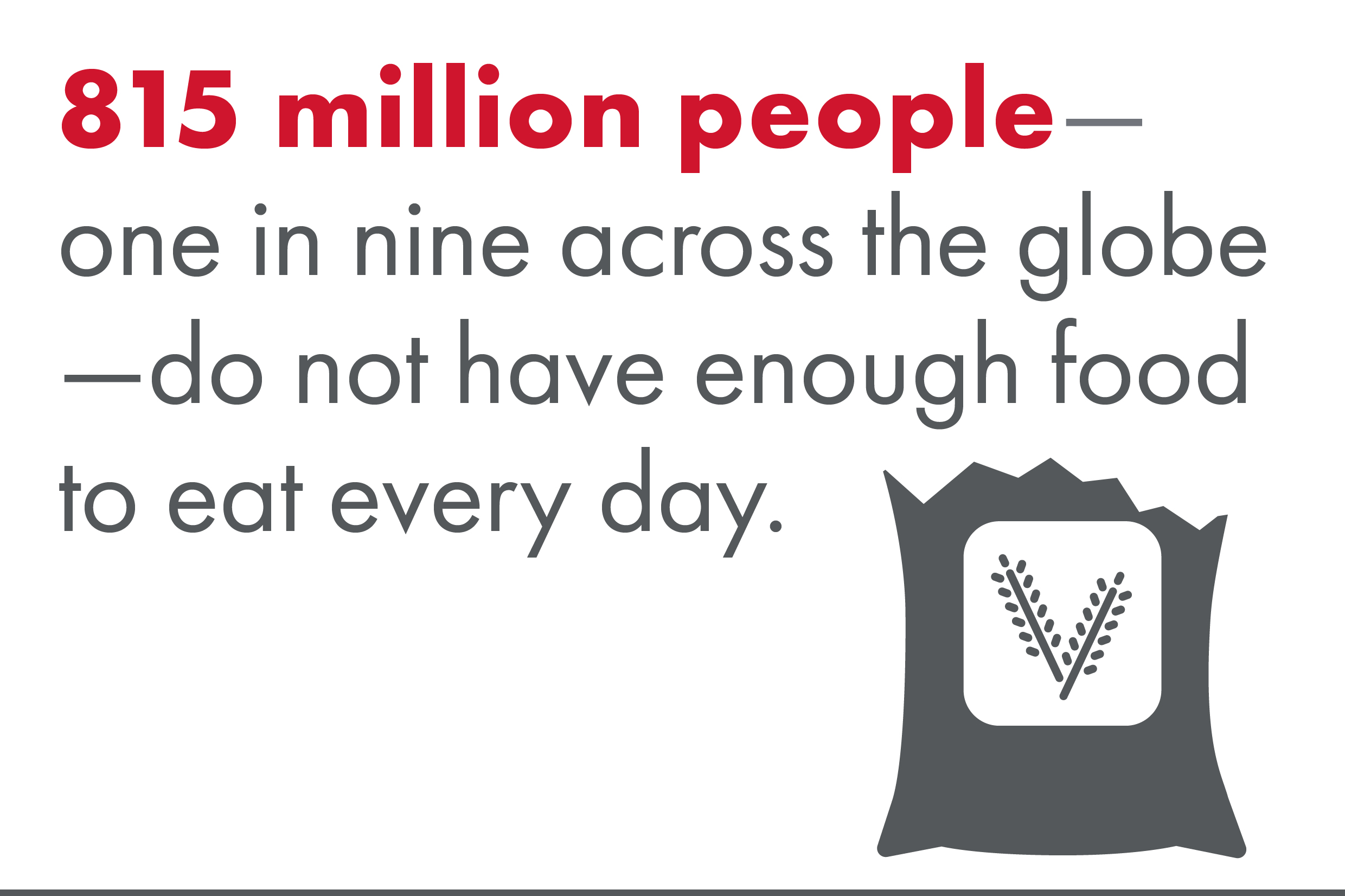
Some 815 meg people in the world do not accept enough food to lead a healthy active life. That's simply over one in nine people on Globe.
Go the facts almost global hunger ▸
For families effectually the world, hunger ways more than than going to bed with an empty breadbasket. Getting the correct kind and quantity of nutrient at unlike stages of life can hateful the divergence between becoming a salubrious adult — or not.
Growing up with hunger and malnutrition can inhibit evolution, go far hard to focus in schoolhouse, and after contribute to complications during pregnancy.
What are the root causes of hunger and malnutrition? And how does information technology affect the different stages of a person's life?
Larn more than about the effects of hunger and malnutrition below, and what we are doing to stop both below.
Growing up hungry: Infants
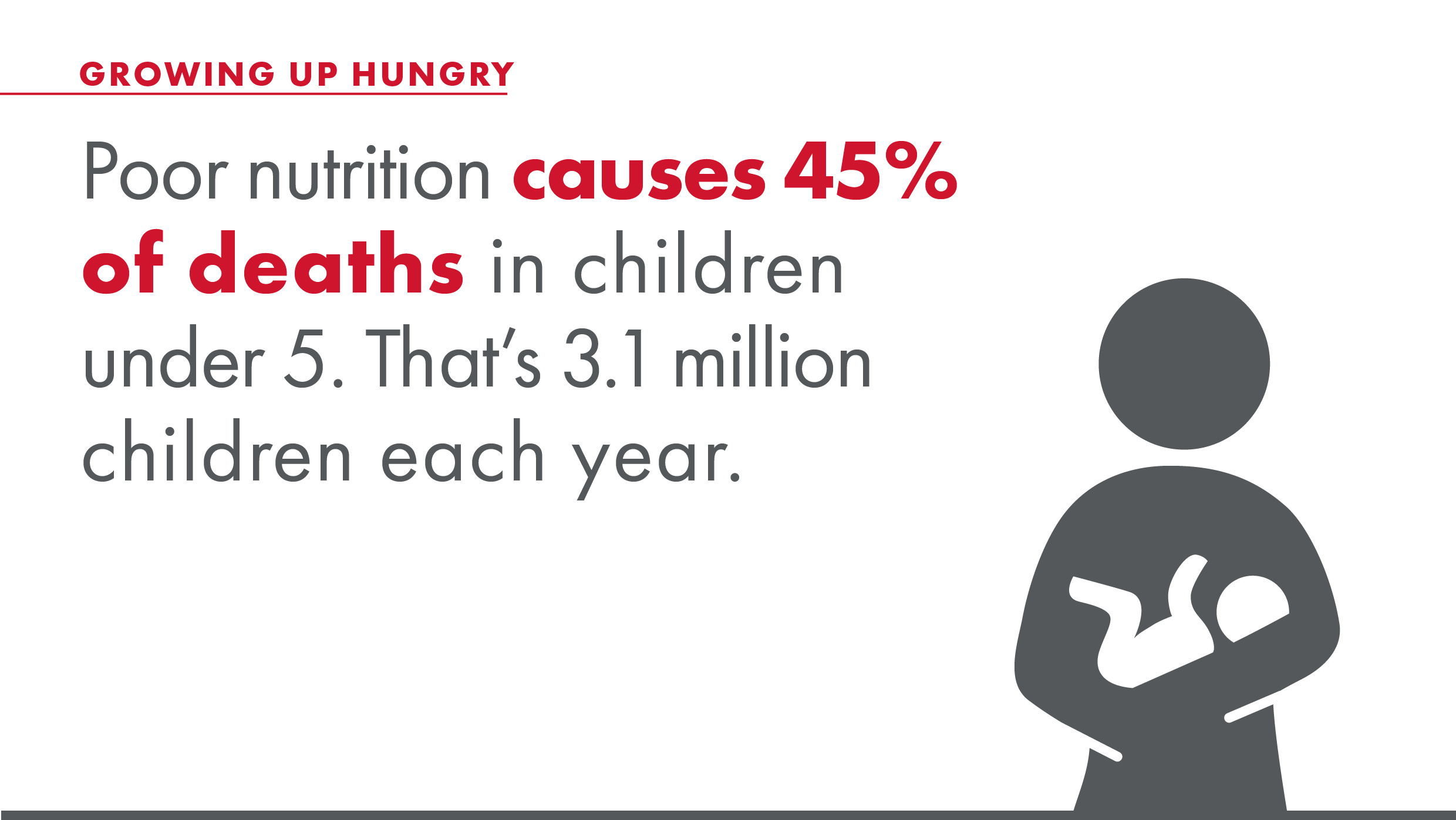
The 1,000 days from the beginning of a woman'due south pregnancy to her child's 2nd birthday are some of the virtually disquisitional for human diet and growth.
If an infant doesn't receive plenty food or proper diet during this fourth dimension, the effects often can't be reversed.
"Especially for children under 2, the effects of chronic malnutrition tin be lifelong. Those who survive may accept reduced resistance to illness and infection later in life," said Cathy Bergman, Mercy Corps' director of health nutrition and food systems.
An infant who doesn't receive the correct nutrients during this window of time has a college risk of dying during infancy and is also more likely to suffer from developmental delays and chronic health issues.
These risks are especially prevalent in Africa and Asia, where malnutrition is widespread and astringent. Twelve percentage of all the globe's acutely malnourished children alive in the Democratic Democracy of Congo solitary. And in countries like the Central African Republic and Islamic republic of pakistan, more than xl per centum of children are stunted. The number is fifty-fifty higher in Afghanistan, where threescore percent of children accept impaired growth.
When infants practice become the nutrition they need, they are more likely to hit mental and physical development milestones on time and are less probable to go sick.
Malnutrition fact: Almost one in every 15 children in developing countries dies before the age of 5, most of them from hunger-related causes.
Through Mercy Corps' malnutrition and hunger programs, nosotros promote the Globe Health System'due south recommendation: exclusive breastfeeding until a baby is six months old, with the add-on of healthy complementary foods after 6 months. However, following these recommendations can be challenging in some places.
Breastfeeding is estimated to be the single largest countermeasure against child mortality, but mothers in many developmental contexts don't accept access to basic prenatal or medical care, let lonely teaching nigh nutrition and benign feeding practices. They may cull to feed their babies h2o or tea as their mothers did, or follow other cultural norms that are customary in their order but not necessarily best for their children. Just effectually forty percent of infants around the earth were exclusively breastfed in 2016.
A lack of cognition about home hygiene, diet diversity and nutrient grooming tin can also contribute to malnutrition.
"Generally, yous desire to brand sure that the food is safe, and that you're using make clean water to wash the food. Introducing fruits, vegetables and dairy products is likewise important," said Bergman. "In many places, there's a reliance on a staple grain, just we want to make sure that's not the only thing."
In many of the places where we work, like Niger and Ethiopia, staple grains like millet and sorghum are the main function of virtually meals. With such a limited diet, young children are at gamble for serious nutritional deficiencies.
Our work in these places encourages breastfeeding and helps people learn about the importance of diet variety, as well as how to grow fruits and vegetables to feed their children.
Our impact

Dhaki, 25, and her family live in the lowlands of Federal democratic republic of ethiopia, where poverty and recurring climate disasters, like drought, brand hunger and malnutrition a constant threat. Most eight million people need emergency food assistance in Ethiopia, and around 3.v million children are malnourished.
When we met Dhaki, her three young children weren't eating enough each day, and the nutrient they did eat wasn't very fresh. But through a Mercy Corps program in her surface area, she learned nigh the importance of breastfeeding — and how to incorporate sanitized milk, porridge, eggs and potatoes into the family diet. Now, everyone in her family is healthier and stronger.
Growing up hungry: Children
Every bit children go older, they need enough food and nutrients to fuel their growing bodies. Unfortunately, 1 out of every six children in developing countries is underweight.
Children are particularly vulnerable to the effects of malnutrition and hunger because their bodies are withal growing.
"If children miss milestones as they grow through their second altogether, they don't have an opportunity to go back and grab up when the nutrient is available," said Bergman.
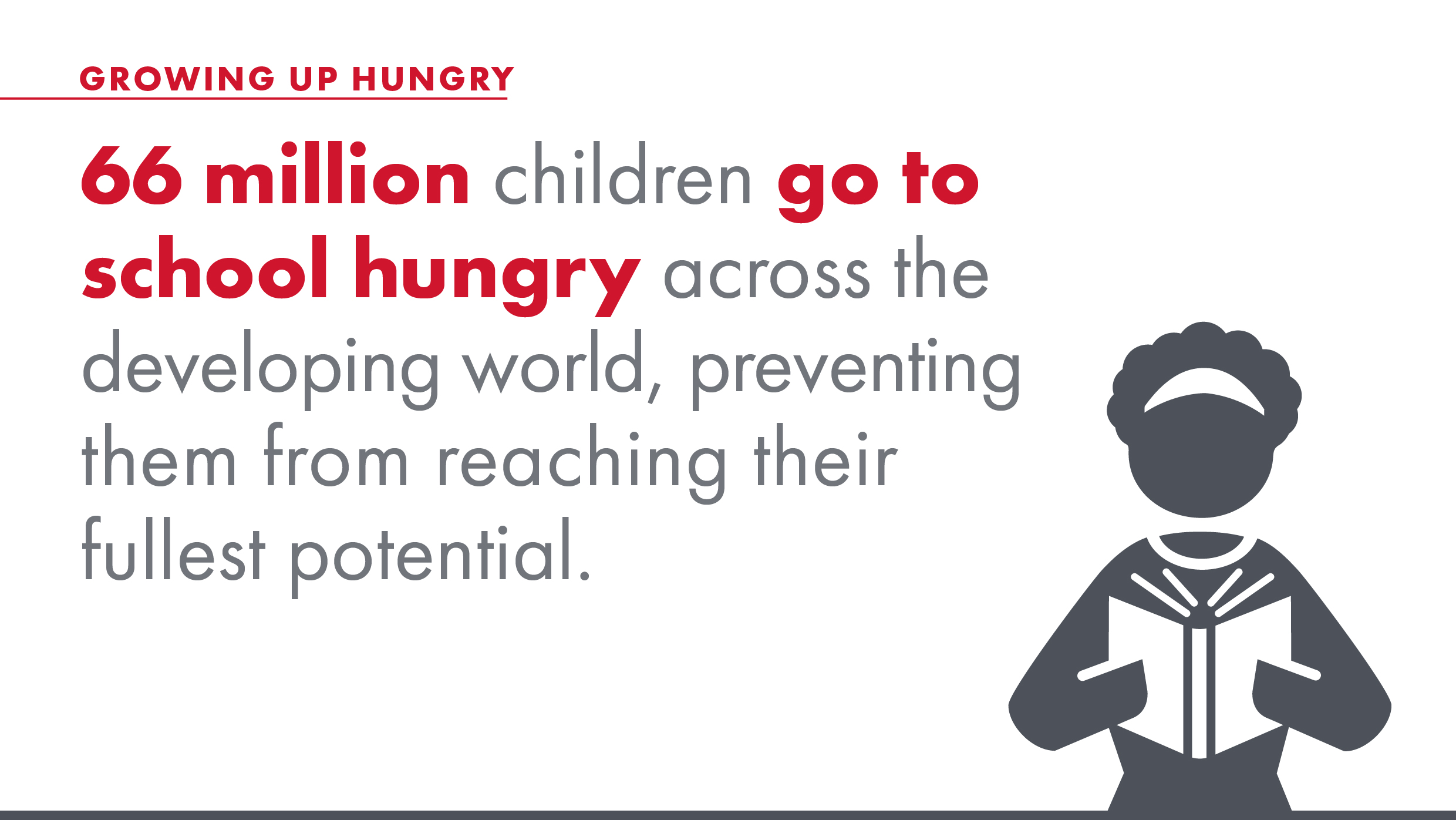
Proper nutrition as well plays a part in one of the nigh of import aspects of a child'south life — learning. Sixty-six 1000000 children attend classes every day with hungry bellies, and millions more than are stunted from childhood malnutrition.
Malnutrition fact: An estimated 250 1000000 preschool children practice non get enough vitamin A. Some 250,000 to 500,000 vitamin A-deficient children become blind every twelvemonth.
One in every four children nether the age of five — or 155 million children effectually the world — is stunted. Impaired growth and development due to malnutrition can interrupt a child's education in several ways. Children who are stunted do not develop at a normal pace. They often suffer from chronic malnutrition and take very niggling resistance to infection and disease — meaning that they'll miss more days of schoolhouse due to illness.

"If your encephalon never fully developed to its capacity, then you're non going to go equally much out of your instruction," said Bergman.
Fifty-fifty when children aren't stunted, they still need enough food and nutrients every day to assistance them focus and learn to their full potential. Malnutrition can crusade mental deficits, besides as things like depression, delayed emotional development and impaired motor functions, which can make it even more than difficult for children to perform well in school.
"Even on a brusk term ground, a lack of nutrients can touch your endurance, memory and ability to focus," said Bergman.
In the terminal five years, we've screened more than 100,000 children and youth for malnutrition and offered treatment for a diverseness of related health issues. We as well provide school lunches to support kids' education and healthy development in places where they are at risk of missing out on both, like Lebanon and Due south Sudan.
And nosotros tackle the root causes of babyhood malnutrition by helping families grow or buy plenty nutrient — and learn how to gear up good for you and nutritious meals. This keeps children in school and able to learn to the all-time of their ability.
Our touch on

Many of the poorest young students in Lebanon, including Syrian refugees, come to school hungry each and every day. Final year, Mercy Corps piloted a school dejeuner programme that worked with local businesses to make and pack healthy lunches that would keep the children full and focused.
More than 37,000 well-rounded meals were delivered to students like this young girl. "The food is filling them up with energy so they can concentrate," said a teacher at one of the schools. "When they're hungry they tin't actually pay attention."
Growing up hungry: Adolescents
Beingness an adolescent anywhere in the world can exist difficult — it's a time fraught with physical and mental change. And malnutrition and hunger at this time tin can pose serious health risks.
Adolescence is a pivotal time that will help determine the remainder of a young person's life. Depending on what resources, like food and instruction, are available to them, adolescents have the power to break the bicycle of poverty and in turn, the bicycle of hunger.
Malnutrition fact: Nearly 50 percentage of people living in extreme poverty are 18 years old or younger.
When trapped in poverty, adolescents may face malnutrition and hunger, be forced out of school, and if they're girls — be at chance for marrying at a immature age.

Adolescent girls are vulnerable to early pregnancy. According to the United nations Population Fund, 20,000 girls under the historic period of xviii in developing countries give birth every day, totaling more seven meg births per year.
Becoming pregnant at a young age can cause serious problems for the daughter's health, and also the health of her child. If a girl is already suffering from hunger and malnutrition when she becomes significant, the effects can be even more damaging.
"Getting enough iron is tough every bit a adult female, and if you're still growing and also pregnant, it's really hard to become enough," said Bergman.
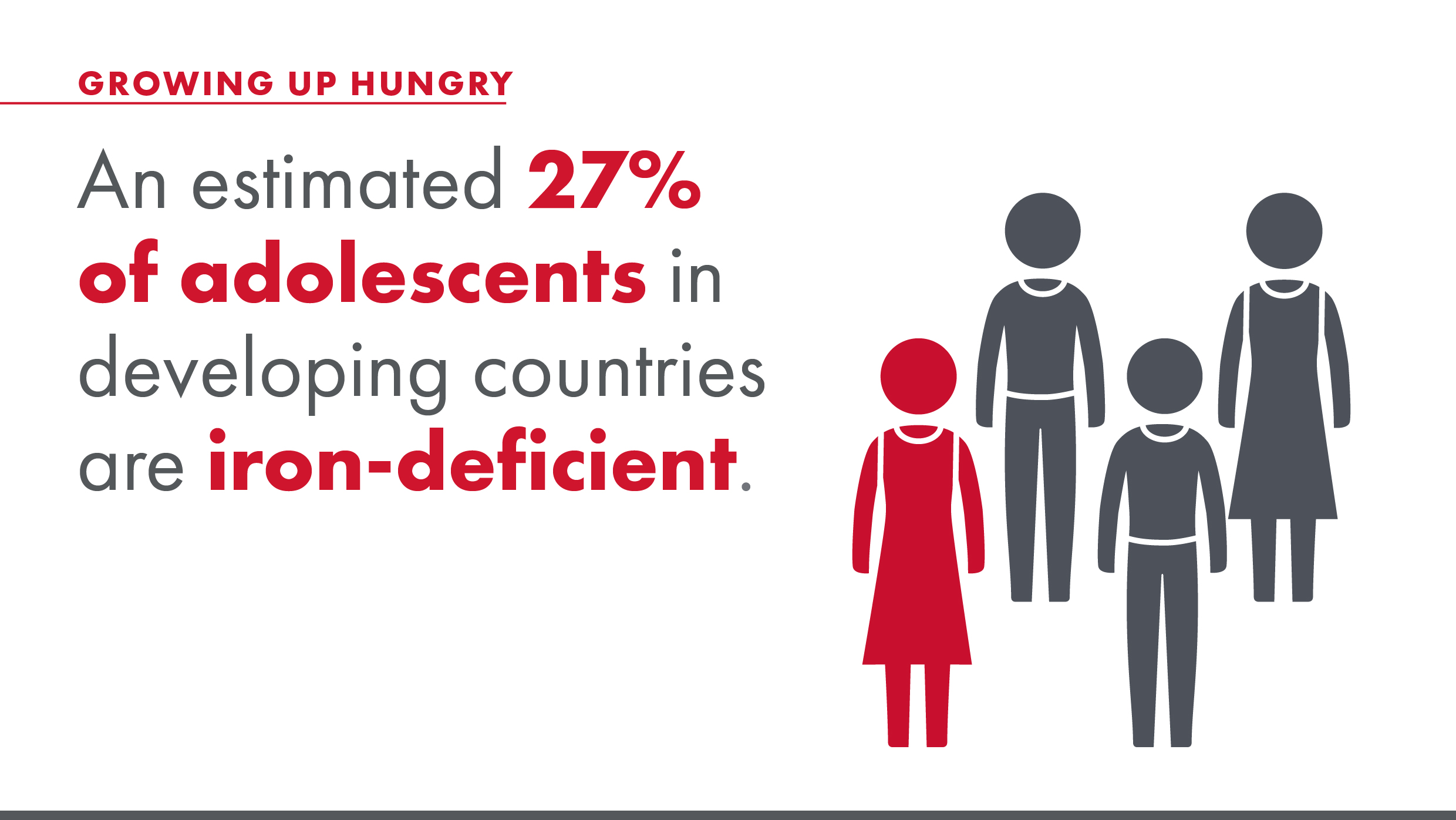
An estimated 27 percent of adolescents in developing countries are atomic number 26-deficient. Women and girls who don't go enough iron can end upward anemic — a condition that can cause serious complications during pregnancy. More 30 per centum of women globally are affected by anemia.
Malnutrition fact: According to the World Wellness Organization, anemia contributes to about xx percent of all maternal deaths.
To help adolescents get through this period of transition and become good for you adults, our work helps them stay in school, delay early matrimony and pregnancy, and learn how to make nutritious food choices.
Nosotros likewise support young entrepreneurs effectually the world so they tin start businesses and earn more income. With more income, they can grow or purchase the food they need to overcome malnutrition and hunger, and can then pass this success on to their families.
Our bear upon

In rural Niger, where 13-twelvemonth-old Badariya lives, the average age of spousal relationship is just fifteen. Badariya isn't allowed to attend school, only she does get to a Mercy Corps girls group in her village every week. At that place, she learns well-nigh how to make good for you choices, the risks associated with early on spousal relationship and childbirth, and how to build a financially strong future.
"My opinion is that women demand to be self-sufficient in this village," Badariya said. "I can do any kind of job I want with an education."
The girls groups are part of a larger diet-focused program in Niger. Past giving young girls the information and resources they need to delay marriage and be financially independent, they can grow up able to raise stronger, healthier and better-nourished families.
Growing upward hungry: Adults
Unfortunately, the effects of hunger and malnutrition don't end when a child reaches machismo. Childhood malnutrition is linked to low productivity after in life. If a person was stunted equally a child, they may have physical or developmental disabilities.
Many adults who suffered from malnutrition at a younger age besides have chronic health problems and weaker immune systems. This means that they may go sick more than often, be sick for longer, and exist less able to work and provide for a family. Malnutrition costs the global economy $iii.v trillion every year.
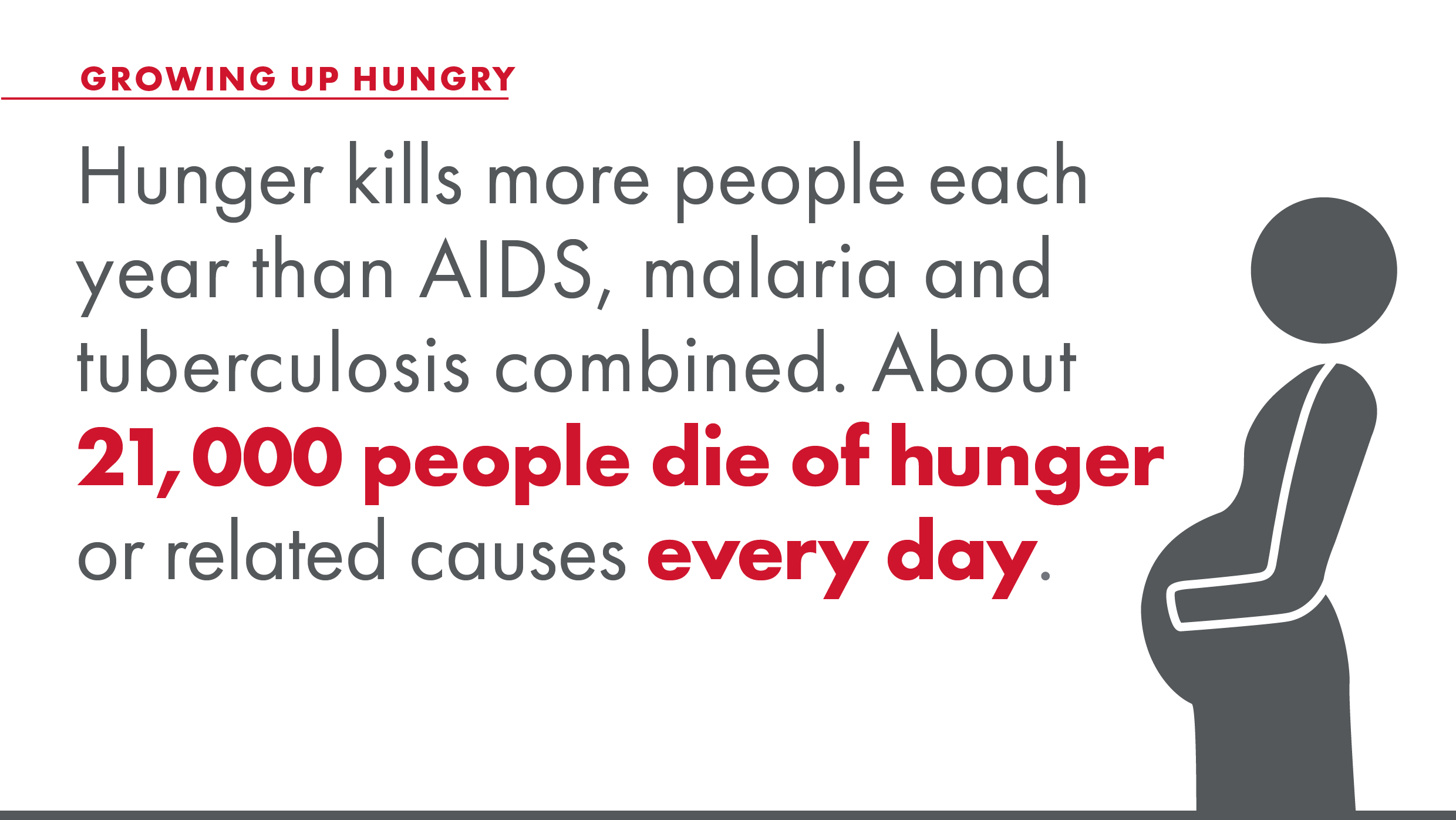
Malnutrition fact: About 21,000 people dice of hunger or related causes every twenty-four hours.
"Experiencing malnutrition as a young child creates lifelong issues, like being more prone to disease," said Bergman. "Undernourishment equally a child can hateful that as an developed, a farmer may work less because of chronic illness."
While the body's growing menstruation has stopped, it's still critically of import for adults to eat enough of the right foods to be healthy and well-nourished.
Just as missing days of school is problematic for children and adolescents, missing days of piece of work as an adult tin pb to earning less income — with less income, the family will accept less food to swallow and be at risk for malnutrition.
And for meaning women around the world, the stakes are high when confronted with malnutrition. In gild to have a healthy pregnancy and give birth to a healthy child, they must consume plenty food, and a wide multifariousness of foods, as well as get enough important nutrients similar iron, vitamin A and folic acid.
Malnutrition fact: Ane out of 6 children is born undernourished in developing countries due to a female parent's lack of nutrition before and during pregnancy.
Fifty-fifty subsequently the baby is born, proper nutrition for the mother helps ensure that her baby grows up healthy. If a mother is malnourished while breastfeeding, her baby may also be in poor health or suffer physical or developmental delays in growth.
Strengthening small business owners and local economies is ane way that we help communities fight hunger and malnutrition around the world.
Nosotros also work with small farmers and home gardeners to encourage the introduction of healthy and diversified crops.
To help significant women and new mothers stay good for you, nosotros accept many programs that encourage breastfeeding and offer information on proper nutrition, healthy food preparation, and how to treat sick or malnourished babies.
Our bear upon

Concy and her hubby, Charles, are trying something new on their homestead in Republic of uganda: growing chia seeds. With training and support from Mercy Corps, the couple has already seen success growing this new and unusual food, which is rich in healthy fats.
Because of chia's high market value, Concy and Charles are earning more income. They tin can at present use the extra funds to feed their children a salubrious diet, pay for school fees and eventually build a new abode. "I am so hopeful for the future," said Charles.
Hunger and malnutrition: A global trouble

Right now, there is enough food in the world for every unmarried person to pb a healthy, productive life. Just factors like poverty, climate change, gender inequality and conflict are still preventing much of the world from getting what they need.
That means the crusade of hunger and malnutrition in many places is not a lack of food — it's that the people who need food the near only don't have steady access to it.
In countries like Yemen and South Sudan, which are both in the midst of years-long wars, ongoing violence prevents nutrient and others supplies from reaching markets. Clashes also frequently transport families running for rubber, forcing them away from their farms and other resources. A combined 23 million people in South Sudan and Yemen are living with hunger.
Poverty is likewise a key factor that keeps food from families and leads to malnutrition around the world. A person's economic status plays a disquisitional function in whether or not they accept enough food for themselves, or to feed a family. As one of the virtually financially unequal countries in the world, Guatemala has the highest rate of child stunting in all of Latin American and the Caribbean, with upwardly to 90 percent of children being malnourished in the poorest, most marginalized communities.

And in places like Nepal and Niger, where a heavy reliance on agricultural livelihoods combines with extreme poverty, climate change is fueling recurring and unpredictable weather condition disasters that destroy nutrient sources and bulldoze upwards the take a chance of malnutrition.
But fifty-fifty if those factors that prevent access to food disappeared, nosotros will even so need to increment product to proceed up with the rise in world population.
By 2050 the world population is expected to reach nearly 10 billion. Food production will need to double to provide enough food for everyone to consume.
"There was a lot of agronomical development in the final century, and agronomical productivity soared," said Bergman. "But in the last xx-thirty years that investment slowed downwardly. Agricultural productivity is leveling off but our population is growing."
All these factors combined hateful catastrophe global hunger and malnutrition requires more than one solution: We must ensure that people have the nutrients they need to stay healthy — and also the right support and tools to build a stronger economic future for themselves.
Mercy Corps currently operates roughly lx food-focused programs in more than 30 countries around the world. This work helps individuals and families meet their own food needs and improves access and availability of salubrious foods in their communities.
Lend your voice: Tell Congress to protect programs that fight global hunger and malnutrition ▸
Together, we tin make a difference

Last year, the U.N. reported that the number of hungry people in the earth has risen to approximately 815 1000000 — the first increase after years of progress. While this number is an unfortunate setback, we've yet seen meaning comeback in the concluding 25 years.
Almost 2 billion people were freed from hunger between 1990 and 2015. The work that we do, cheers to your support, does brand a departure for families around the world — and we must continue up our efforts to make sure the numbers don't continue to increase.
In the last five years, we accept improved access to nutritious food for more than than 30 1000000 people and provided nutrition and health training to hundreds of thousands of people who are now improve positioned to go along their families healthy. Each year, nosotros as well help well-nigh 1 one thousand thousand modest farmers meliorate their agriculture techniques and then that they can grow more than food and earn higher incomes.
Our holistic approach to combating hunger and malnutrition is only possible because of you. Thanks to your back up, farmers are boosting their harvests, young adults are starting their own businesses, girls are able to stay in school, and mothers accept the knowledge they need to go on their babies salubrious.
If we proceed to fight the root causes of hunger and malnutrition — poverty, limited admission to food, and inequality — we tin can make a difference together in the fight confronting global hunger.
Source: https://www.mercycorps.org/blog/quick-facts-malnutrition
0 Response to "what other aspects of life can lead to vulnerabilities in attaining adequate nutrition"
Post a Comment